
Arlene Schnitzer Concert Hall Information
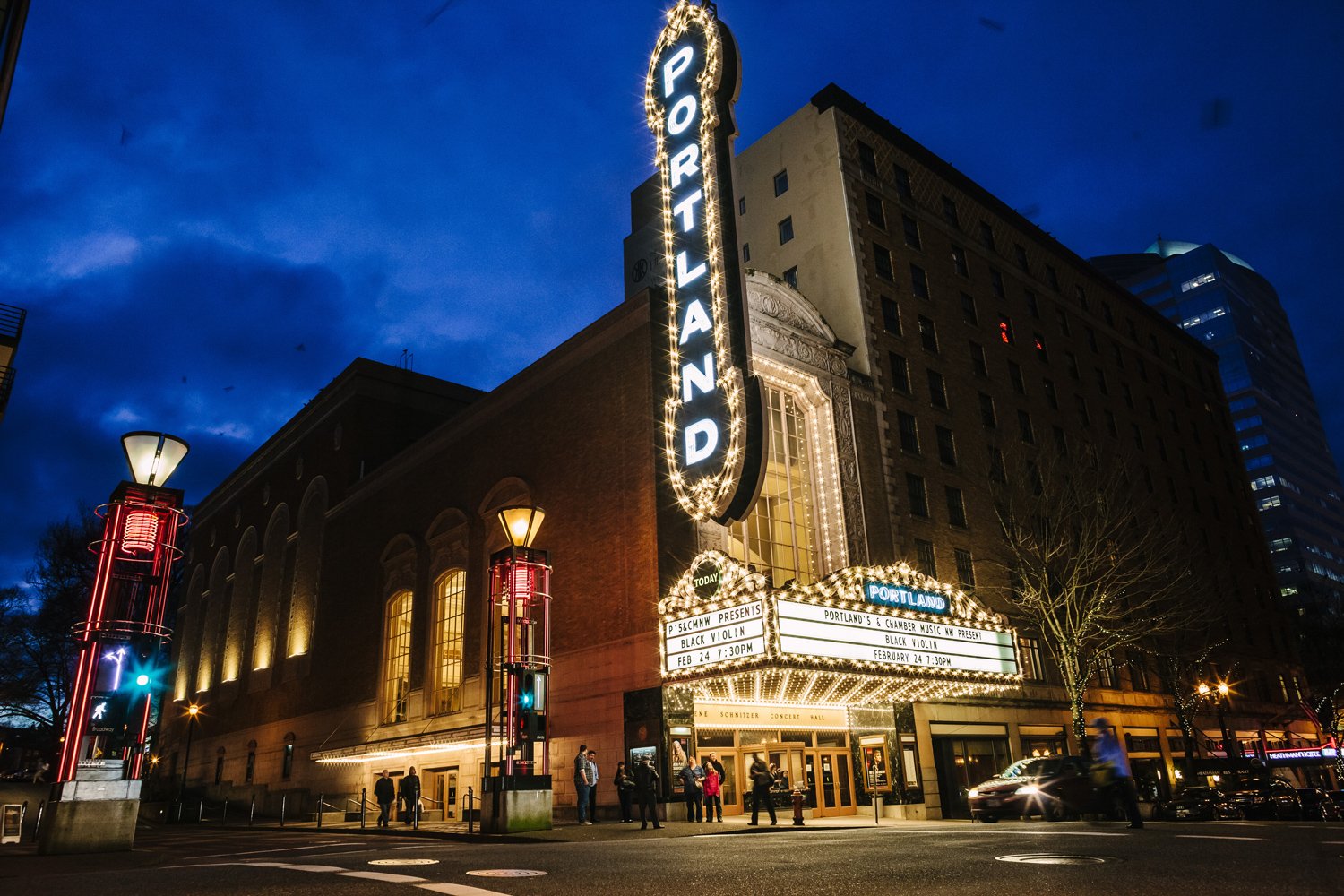
The Arlene Schnitzer Concert Hall first opened in the 1920s as the Portland Publix Theatre. It later changed its name to Paramount Theatre after 1930 and has been known as a movie theatre and performance space. Recently, it’s become known as the home for the Oregon Symphony, Portland Youth Philharmonic, and the Metropolitan Youth Symphony. It is also a concert and film venue that is exceptionally known as the last surviving theater building on Broadway, which was once lined with large theater houses.
The Arlene Schnitzer Concert Hall represents the pinnacle of performing arts venues in the Pacific Northwest. This magnificent theater showcases a diverse array of events, from classical music performances by the Oregon Symphony to appearances by internationally renowned artists. As part of the Portland Center for the Performing Arts, the hall also serves multiple resident companies, including the Portland Youth Philharmonic, Portland Arts & Lectures, Metropolitan Youth Symphony, and White Bird Dance Company.
With a capacity of 2,776, the venue creates an intimate yet grand atmosphere that enhances every performance. The 94-by-32-foot stage’s traditional proscenium provides an exceptional platform. Performers are supported by dressing rooms for 90 artists, an orchestra pit, and a choir loft.
You can fully appreciate the building’s distinctive 65-foot “Portland” sign, illuminated by approximately 6,000 theatrical lights, which has become an iconic symbol of the city’s cultural vitality. Despite the theater entertaining audiences since 1928, today’s facility sports technical specifications that rival those of major metropolitan venues. Prepare to be amazed by the state-of-the-art sound and lighting systems, the optimal sound quality, and the flexible configuration that caters to concerts, conferences, galas, and special presentations alike.
The Historic Legacy of a Portland Icon
The original building was designed by architectural firm Rapp and Rapp, who was known for their famous theater buildings. At the time, it was described as being of the French Renaissance or Northern Italianate style.
The Paramount, as it was called, was considered the largest and most lavish theater for a city the size of Portland. When it opened it was a vaudeville venue that later changed its name following a contract with Paramount to show their films locally. And it remained a movie house until 1972 when it hosted concerts.
During the early 1970s, it was considered uneconomical to operate a theater in the days of television. So it showed its last film showing on August 15, 1972 (Dr. Phibes Rises Again with Vincent Price).
Later, in September, 1983, the theater underwent a major renovation that sought to update the theater while restoring the building to its original opulence. Great care was made to keep the style and class of the original theater while making it safe and comfortable for both guests and performers as was the need for modern day theater-goers.
Today, the concert hall isn’t just a place for movies or concerts, it also hosts a variety of presentations. These include classical, jazz, pop, rock, folk, and gospel music among others. It is also used for conferences, weddings, and other major social events.
The concert hall has the following features.
- » Seating for 2,776 in orchestra level and balcony.
- » 94 × 32-foot (9.8 m) stage with 54 × 32-foot (9.8 m) traditional proscenium.
- » Orchestra pit for 15; a choir loft.
- » Dressing rooms for 90.
- » Portable, flexible acoustical shell.
The Arlene Schnitzer Concert Hall opened its doors on March 8, 1928, under the name the Portland Publix Theatre. The renowned architectural firm Rapp and Rapp designated the building to exemplify the era’s opulence, including elaborate murals, crystal chandeliers, and luxurious furnishings, some of which were imported from French museums.
While initially serving as a vaudeville venue, the theater transitioned to showing Paramount Pictures films in 1930, prompting a name change to the Paramount Theatre. Even back then, the building’s grand lobby featured marble walls and velvet drapes. The central chandelier became one of the theater’s most celebrated features, spanning nearly eight feet, weighing over 1,700 pounds, and glittering with over 180 lights.
The Concert Hall’s Transformative Years
The building experienced significant changes throughout the mid-20th century. The theater showed its last first-run Vincent Price film, “Dr. Phibes Rises Again,” in 1972. From there, it transitioned to hosting live concerts, with Seattle-based Paramount Northwest leasing the space to promote rock concerts and emerging artists. That same year, The Portland City Council designated the building as a landmark, and by 1976, the city had added it to the National Register of Historic Places.
Unfortunately, since its condition had severely deteriorated, the concert hall faced potential demolition in the early 1980s. The city eventually condemned the building in 1982 and paid $4.1 million to acquire it for public use. Its major $10-million renovation began in September 1983, following Boora Architects’ designs to restore the building’s original grandeur.
The year-long renovation project involved recasting, repairing, or replacing a majority of the theater’s ornate interior while modernizing it for contemporary audiences and performers. The iconic “Paramount” sign was replaced with a replica (reading “Portland”).
The Public Concert Hall’s Renaming and Reopening
The newly renovated theater reopened on September 8, 1984. Its new name honored Arlene Schnitzer, a Portland resident who, along with her husband Harold, contributed generously to the renovation project.
The Arlene Schnitzer Concert Hall marked a new chapter for the building, transforming it from a deteriorating movie palace into a premier performing arts venue. Today, the value is estimated at around $32 million, a testament to the hall’s cultural and economic significance.
The hall has hosted countless legendary performers over the decades, including Louis Armstrong, Frank Sinatra, Bob Dylan, Bruce Springsteen, Prince, and many others. Attracting world-class talent while serving as the home base for Portland’s most prestigious performing arts organizations, the Arlene Schnitzer Concert Hall is an irreplaceable part of Portland’s cultural fabric.
For more information on the Arlene Schnitzer Concert Hall see the pages below:
Arlene Schnitzer Concert Hall Parking:
Read parking information and directions for the Arlene Schnitzer Concert Hall.
Ticket Policies:
Read ticket policies, ticket verification and refund policies.
Arlene Schnitzer Concert Hall Seating Chart:
View the Arlene Schnitzer Concert Hall seating map and read related seating information.